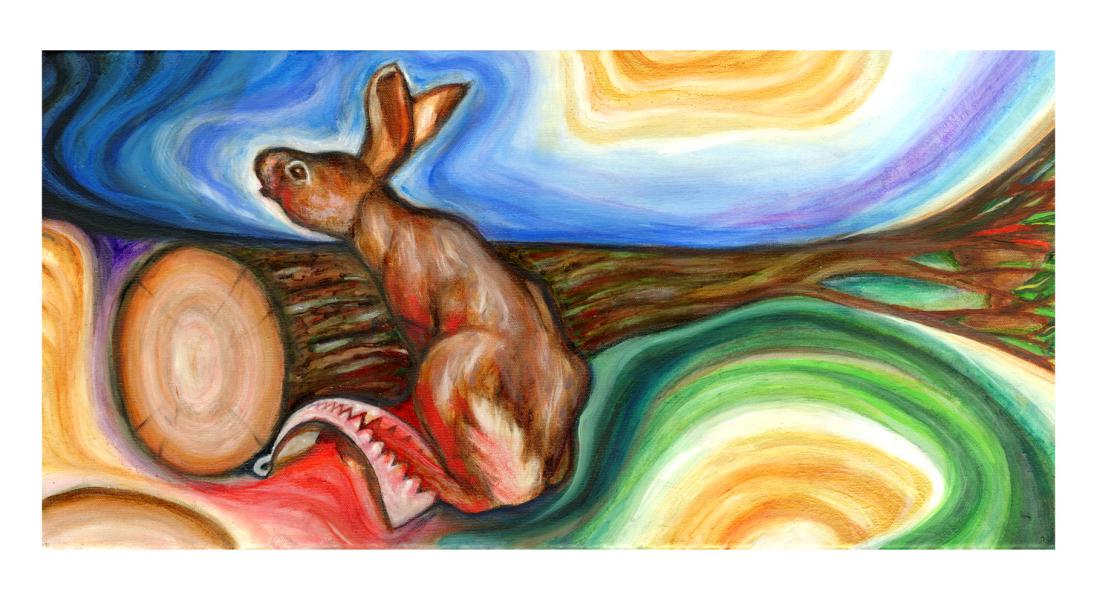
Hare in a trap
A horrifying and piercing scream was heard. Peter Abelard, a famous thinker of the 12th century, and his student Thibault were returning from fishing in the country where Abelard was staying to think things through. His life was in turmoil as he was coming to terms with a relationship with Heloise. He was low in spirit and needing time to recover. The cry sounded like that of a child but when they reached where it was coming from, it was the wailing of a rabbit caught in a trap. Peter released the rabbit and it in nestled in the crook of his arm while it breathed its last. Peter was overcome with the pain and suffering of this world, some of which he had caused and which touched even these animals.
It was Thibault who tried to make sense of this suffering:
“'l think,' says Thibault nervously, ‘God is in it too.'
Abelard looked up sharply.
'In it? Do you mean that it makes Him suffer, the way it does us?
Again Thibault nodded.
'Then why doesn’t He stop it?
Thibault points to a tree near them:
That dark ring there, it goes up and down the whole length of the tree. But you only see it where it is cut across. That is what Christ's life was; the bit of God that we saw....We think God is like that for ever, because it happened once, with Christ. But not the pain. Not the agony at the last. We think that stopped.’”
(Helen Waddell, Peter Abelard. London. Constable 1933. p. 270)
Peter realises that the crucifixion embraces the pain of the whole world but that it somehow continues through time like the rings that go right through the tree. Rowan Williams refers to Peter and Thibault and to their dialogue in his book "God With us" Rowan Williams© SPCK p12-13.